Off-Platform brings together Alice Scope, Alice Bucknell, and Lou Fauroux for a focused screening and conversation on life inside god-mode infrastructures and the queer refusals that move through them.
Fauroux’s post-internet mythologies meet Scope’s work on affective AI environments and Bucknell’s planetary simulations, framing a moment in which the platform era and the fantasy of total control—over the planet, over death, over love—are visibly cracking. The evening centers on two works: Fauroux’s WhatRemains, Genesis, a 2048 fiction of digital immortality and power, and Bucknell’s Ground Truthing (2026 premiere), a simulation film examining how satellites, GPS, digital Earth twins, and long-range climate models shape our understanding of the planet’s future.
Ground Truthing
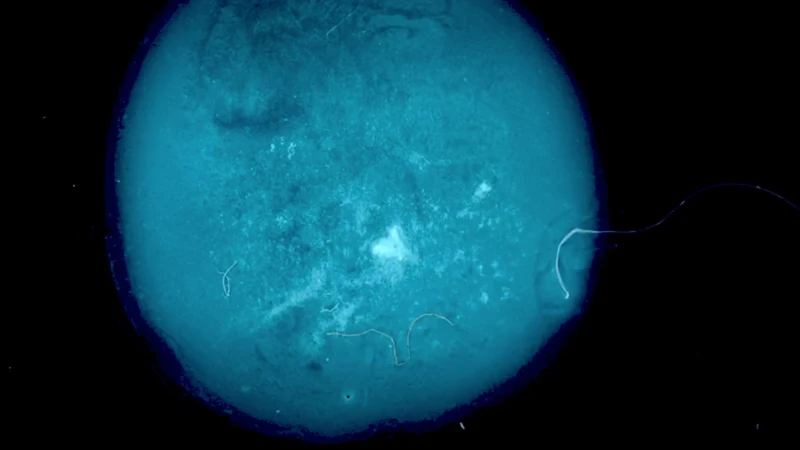
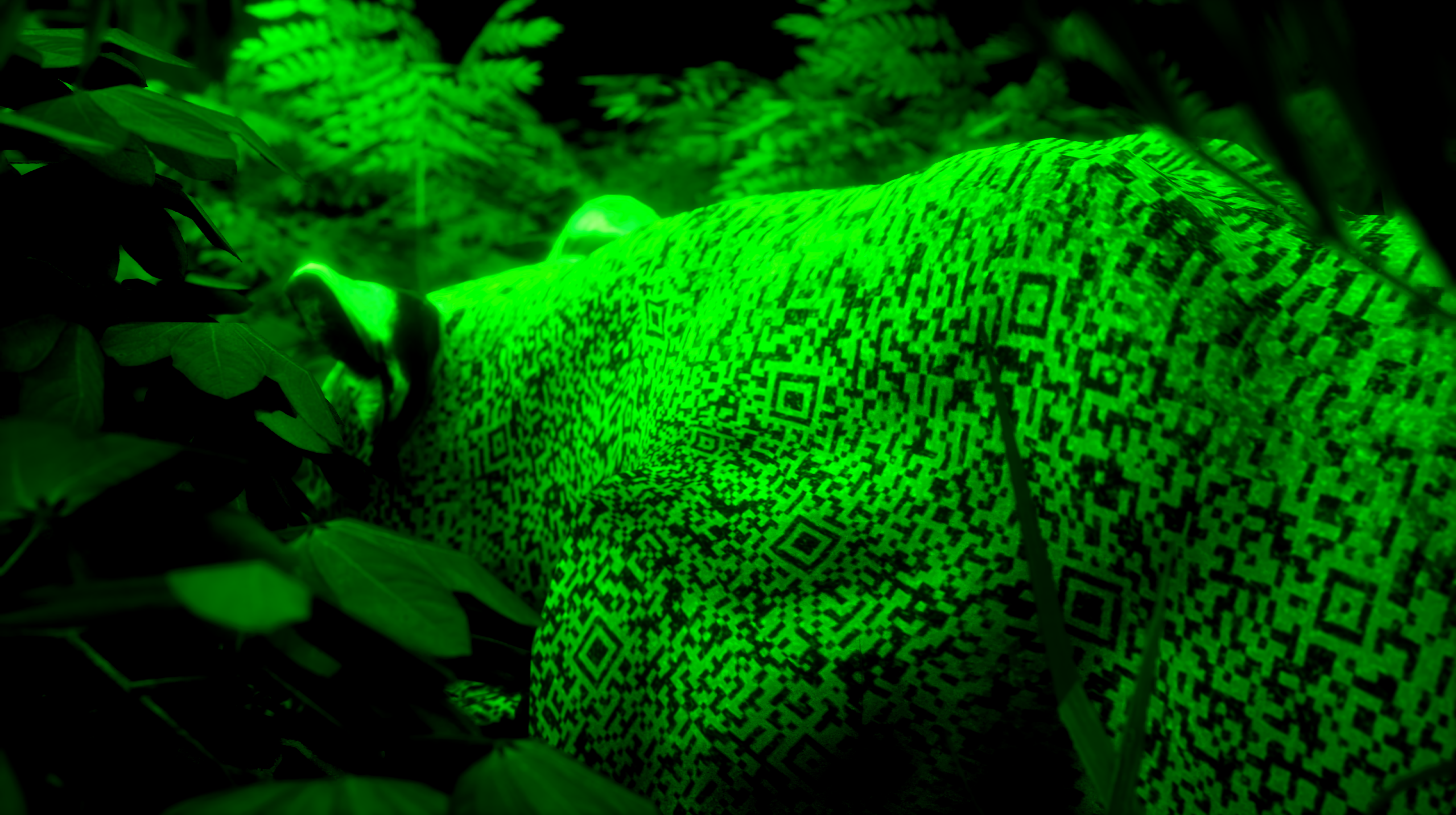
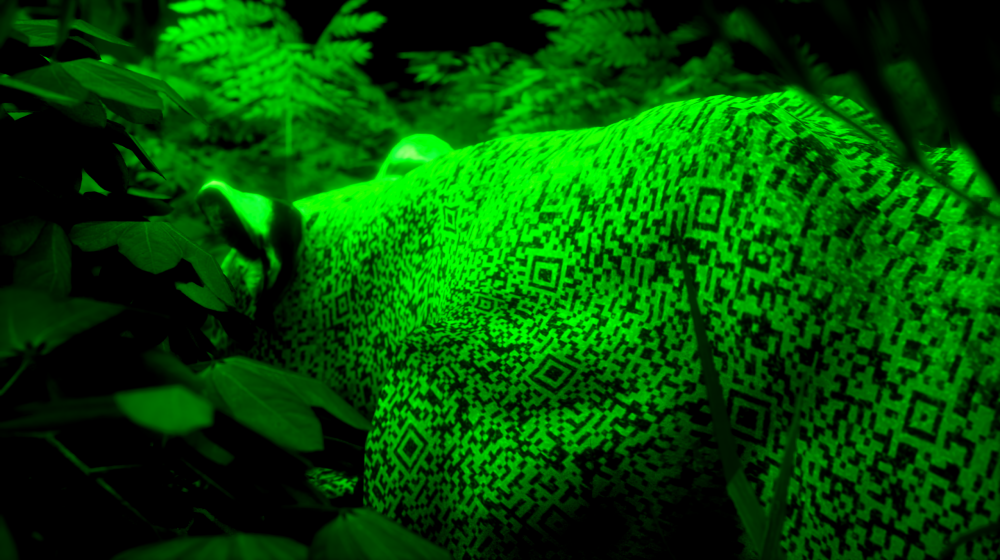
Conceived as a filmic prelude to the artist’s video game project Earth Engine, Ground Truthing is a simulation film exploring the role of remote sensing technologies like satellites, GPS, digital Earth twins, and long-range climate models in shaping the future of our planet. The film also explores the use of these technologies in video games, turning a critical lens on its own creation.
Ground Truthing’s four chapters span real-scale digital doubles of real-world sites—the same worlds populating the video game, imported into the game engine as real-size 3D scans. These landscapes represent vastly different biomes, but are united in their entanglement of human technological systems and “in-between” ecological states: ecosystems that are rapidly morphing at the hands of human-caused climate aberrations.
The film speculates on what satellites sense from high above the planet, and what this apparent omniscience inevitably misses.
Following the narrative of Earth Engine, it embraces the logic, mechanics and language of video games. “Are we okay to pass the controller ?” it asks, clearing the ground for a playable experience that rewards slowing down and paying attention.
WhatRemains, Genesis
WhatRemains, Genesis by Lou Fauroux traces the collapse of human civilization through a futuristic speculation. The film takes as its starting point the scientific research undertaken by GAFAM on artificial intelligence designed to eliminate physical death. It “brings us back” to 2048, when Google, then owning most of the Earth, found a cure for death thanks to a digital immortality software. This software, initially reserved for a wealthy and powerful elite, is soon hijacked by hackers who democratize its access. The film takes up themes including artificial intelligence within the human experience; speculative fiction as a political tool; the figure of the hacker; collective resistance against techno-capitalism; and the ethical challenges concerning death and immortality. Incorporating visual references to science-fiction movies like Matrix or Star Wars, video games, TV broadcasts, as well as Lesbian visual and cultural representations, Fauroux’s film leaves viewers with a sense of hope and jubilation, while envisioning a future where a queer collective will save humanity from the excesses of techno-capitalism.
Alice Scope is a new media art curator and researcher with a focus on human-AI relationships, artificial intimacy, and collective intelligence.
Her expertise lies in building speculative worlds through XR, gaming, blockchain, and performance, frequently engaging in cross-disciplinary collaborations.
Alice is currently partnering with Serpentine Arts Technologies on Partial Common Ownership (PCO), an alternative art ownership mode. Her recent exhibitions— “PET,” "Postgender," "We Might Appear As Forest Fires," "Hotel Blue," and "Posthuman Island"—have been shown at the Gray Area, Berggruen Institute, LACMA, SXSW, Honor Fraser, and California Science Center.
Alice Bucknell is an artist, writer, and educator based in Los Angeles. Their work explores the affective dimensions of video games as interfaces for understanding complex systems, relationships, and forms of knowledge. Bucknell is interested in the ecological dimensions of play as an embodied technology that dissolves binaries between human and nonhuman, natural and synthetic intelligence, and self vs world. They have exhibited internationally, including at Centre Pompidou (Paris), Kunsthalle Praha (Prague), Ars Electronica (Linz), transmediale (Berlin), Arcade Seoul, the Venice Architecture Biennale, the Singapore Art Museum and Serpentine Galleries (London). In 2025, The Alluvials was acquired by SFMOMA, becoming the museum’s first video game in its permanent collection. They teach world-building, game design and philosophies of technology at SCI-Arc and UCLA (Los Angeles).
Lou Fauroux is a visual artist, filmmaker, and DJ whose films, sculptures, and installations explore the ethical challenges of artificial intelligence and virtual technologies. They began creating moving images within a community of porn producers and actresses in Los Angeles and describe themself as “a true product of bedroom culture,” shaped by MTV, YouTube, pirated American series, and Tumblr and Reddit forums. Reworking these influences through a queer lens, Fauroux builds new mythologies that dissect the power structures and excesses of the entertainment and tech industries.
Their work speculates on the future of the Internet and a world marked by climate crisis, fascism, inequality, totalitarianism, and unchecked technological acceleration.
Please note: seating is limited. Doors open thirty minutes prior to the listed showtime. Your RSVP does not guarantee you a seat. Seating is first-come, first-served.